
Pink Fijian Ginger: Traditional Use, Modern Research.
Explore TopShelfNutra’s Organic Pink Fijian Ginger—from its island origins and hand harvest to whole-root preparation, everyday uses, and the research behind this familiar ingredient.
By The TopShelfNutra Team7 min read
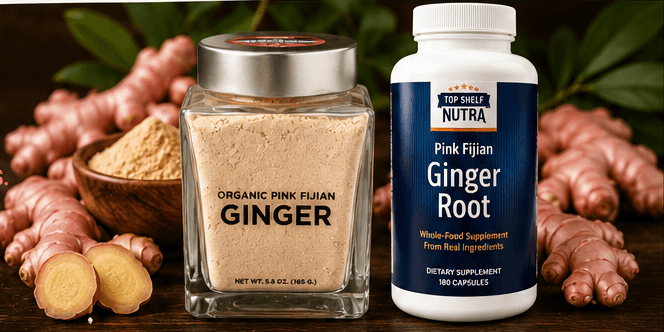
Before our Organic Pink Fijian Ginger reaches your home, its story begins in Fiji—with heirloom roots, island rainfall, and a harvest shaped by hands rather than machinery.
For TopShelfNutra, that story matters. Getting to know an ingredient means learning where it comes from, how it is grown, and what happens between the field and the finished powder.
Ginger may be familiar. The journey behind ours deserves a closer look.
A long history beyond the spice shelf
Ginger, known botanically as Zingiber officinale, has been used for thousands of years in traditional medicine. It has a place in Ayurvedic practice as well as other traditional systems.6, 7 Its history reaches far beyond the familiar jar in the kitchen.
That history has also inspired modern investigation. A 2020 review examined 109 randomized controlled trials involving ginger and human health.5 You can explore the paper through PubMed, the National Library of Medicine’s research database.
Traditional use gives us historical context. Clinical research helps us evaluate particular benefits, preparations, and amounts.
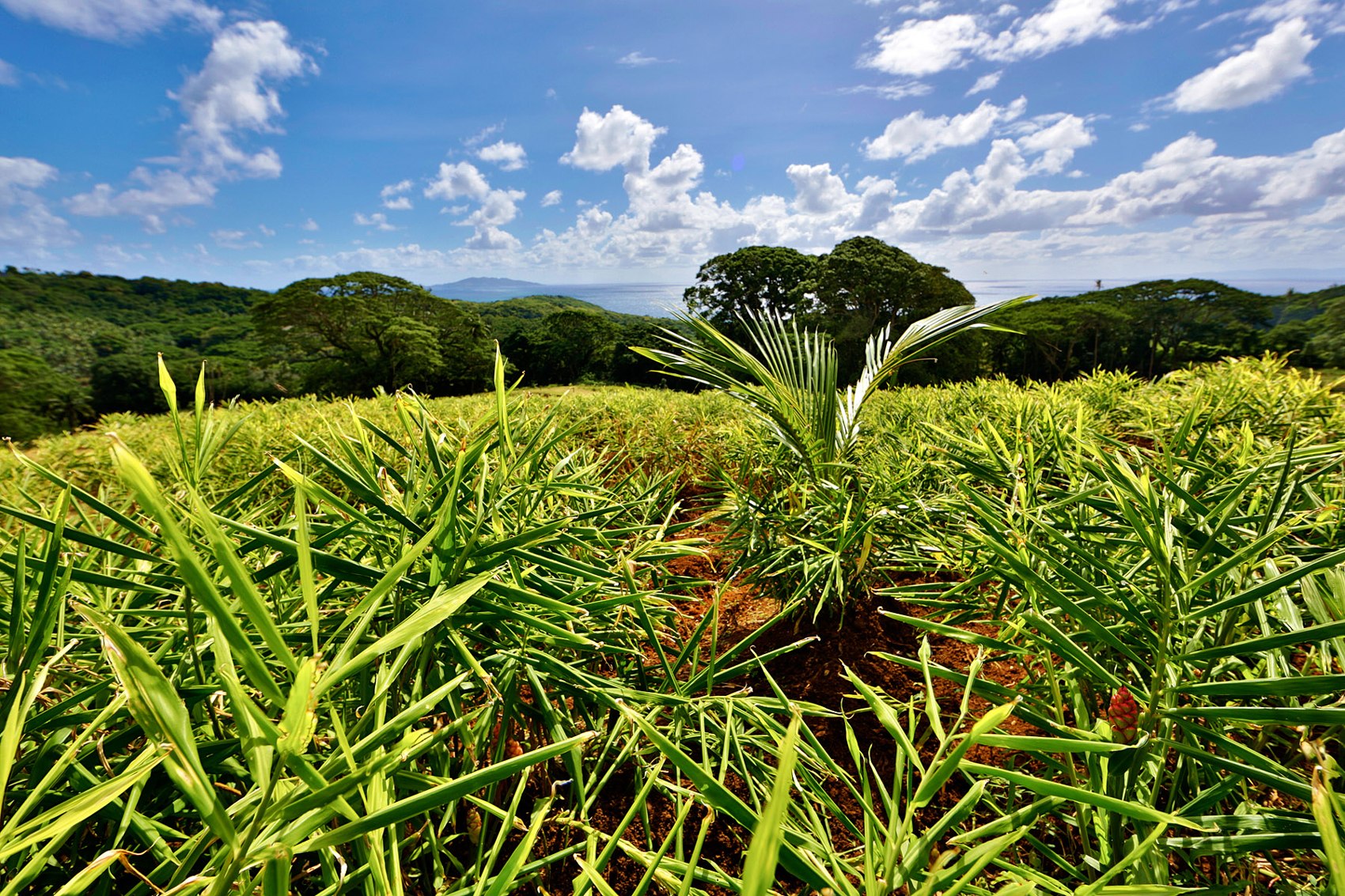
Our story begins with heirloom ginger in Fiji
The sourcing history behind our Organic Pink Fijian Ginger traces its origins to heirloom roots found growing in the jungles of a remote Fijian island. That island heritage is part of the ingredient’s story and the connection we want to preserve. Explore the shared Wakaya story of our ginger and turmeric.
Today, the ginger is cultivated in Fijian volcanic soil and watered by natural rainfall. Its rich aroma and distinctive flavor bring that story into the everyday experience of opening a jar or adding the culinary powder to a favorite recipe.
The story starts in the soil.It continues in the care taken at harvest.
Harvested by hand. Prepared with care.
The steps between the field and our warehouse are an important part of what we want you to know. Here is the process described in our sourcing information:
- Hand harvested. The ginger roots are gathered by hand.
- Washed in Fijian seawater. The harvested roots are washed before further preparation.
- Sliced and sun-dried. The roots are cut into slices and dried in the sun.
- Ground into powder. The dried ginger is milled, then shipped to our warehouse.

We share these details because “ginger” on a label is only the beginning. Origin, growing conditions, and preparation help you understand the ingredient you are choosing.
What do we mean by “ginger root”?
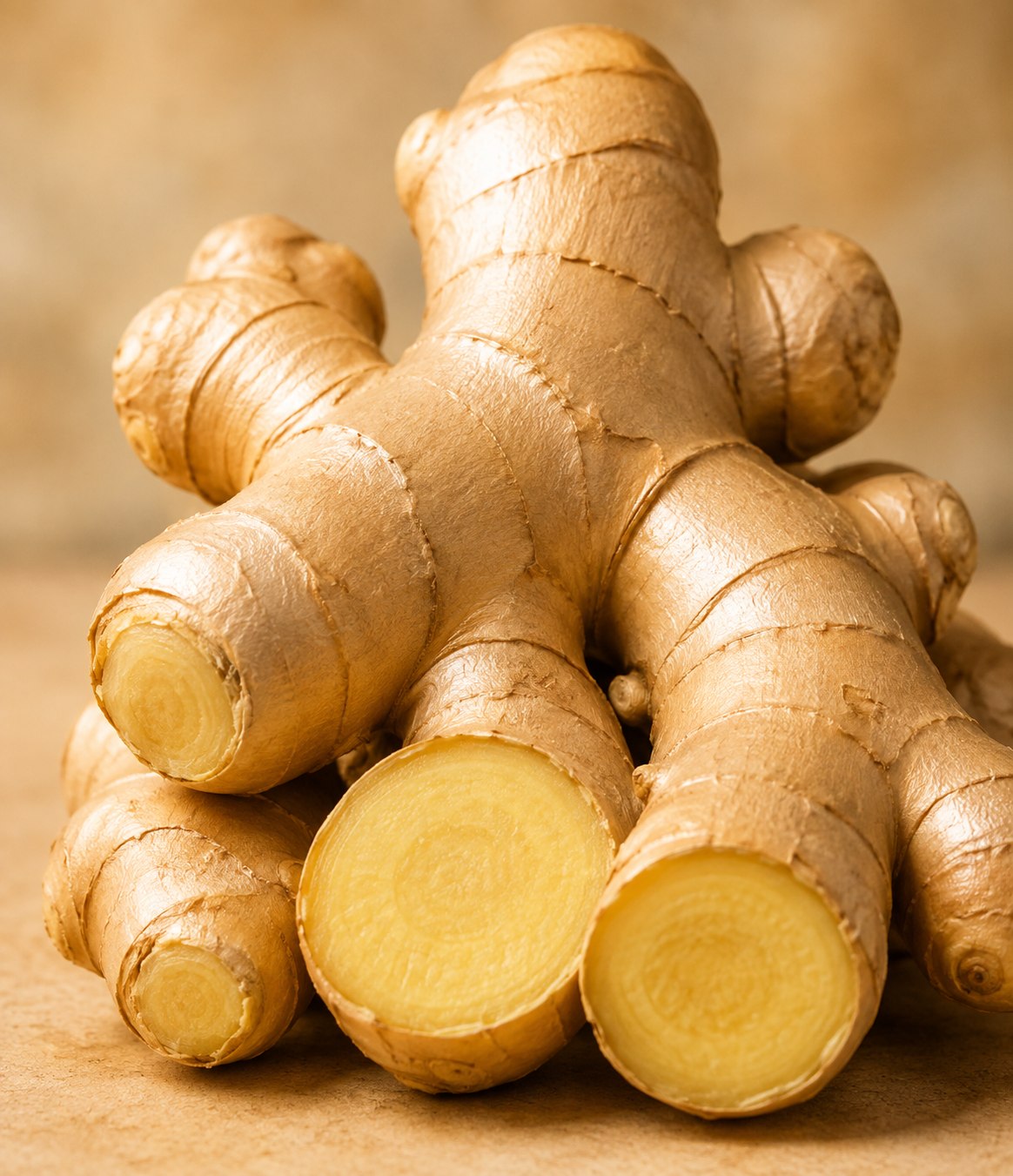
The part we commonly call ginger root is technically a rhizome—an underground stem. Ginger’s botanical name is Zingiber officinale.2
When you read our ginger page, you’ll also encounter compounds such as gingerols and shogaols. These are among ginger’s naturally occurring constituents, and part of the conversation about the plant.1
TopShelfNutra’s approach centers on the whole root. Our ingredient page describes a whole-root preparation rather than an extract with added fillers.1 We encourage you to read the full product label, including the capsule materials and directions.
What the Research Says
A growing body of research explores ginger and its active compounds. Here are six areas of interest, with the type of evidence clearly identified.
- Human clinical: research involving people.
- Human-cell: human-derived cells studied in a laboratory.
- Animal: findings in animal models.
- Laboratory: activity measured in experimental assays.
 HUMAN CLINICAL RESEARCH
Nausea & Digestive Comfort
A review of 12 randomized trials involving 1,278 pregnant women found improved nausea symptoms compared with placebo, but no significant reduction in vomiting episodes. Evidence for postoperative and chemotherapy-related nausea is less settled. Discuss pregnancy supplement use with your healthcare professional.
Viljoen et al. Nutrition Journal. 2014;13:20. 8
Read the study → HUMAN CLINICAL STUDY
Joint Pain & Osteoarthritis
A six-week trial enrolled 261 people with knee osteoarthritis; 247 were evaluable. A standardized extract of Zingiber officinale and Alpinia galanga produced a modest improvement in knee pain compared with placebo. This two-species extract differs from our whole-root ginger powder.
Altman & Marcussen. Arthritis Rheum. 2001;44(11):2531–2538. 9
Read the study → HUMAN-CELL STUDY
Anti-Inflammatory Activity
In human-derived THP-1 immune cells, certain gingerols and shogaols inhibited release of IL-1β, an inflammatory signaling molecule. The researchers found 6-shogaol especially active. This laboratory finding helps explain potential mechanisms; it does not establish an anti-inflammatory benefit in people.
Ho et al. Molecules. 2018;23(2):466. 10
Read the study → HUMAN CLINICAL STUDIES
Exercise Recovery & Muscle Soreness
Two placebo-controlled trials tested raw or heat-treated ginger over 11 days. Participants reported about 23–25% less muscle pain 24 hours after a controlled exercise session. The finding concerns soreness under those conditions, rather than proof of faster recovery or improved athletic performance.
Black et al. J Pain. 2010;11(9):894–903. 11
Read the study → ANIMAL & CELL STUDY
Brain Health & Neuroprotection
A study of isolated 6-shogaol found reduced inflammatory activity and protection of dopamine-producing neurons in cell cultures and a mouse model of Parkinson’s disease. This is early mechanistic research; it does not demonstrate that ginger supplements prevent or treat neurological disease in people.
Park et al. Acta Pharmacol Sin. 2013;34:1131–1139. 12
Read the study → LABORATORY STUDY
Antioxidant Activity
Researchers measured free-radical scavenging and inhibition of lipid oxidation by a ginger extract in laboratory assays. These results demonstrate activity in the tested systems. They do not measure health outcomes or establish that a supplement enhances antioxidant defenses throughout the human body.
Stoilova et al. Food Chem. 2007;102(3):764–770. 13
Read the study →The images illustrate the research topics; they are not photographs or scans from the cited studies.
One more digestive finding worth understanding
A small trial involving 11 people with functional dyspepsia found that ginger root powder helped the stomach empty faster after a test meal. Digestive symptoms did not improve compared with placebo.3 It is an interesting finding, with a different outcome from symptom relief.
These studies tested particular powders, extracts, or isolated compounds. They did not test TopShelfNutra’s finished Organic Pink Fijian Ginger product or establish greater health benefits from a Fijian or heirloom origin. Findings from cells and animals help guide further investigation; human studies are needed to assess benefits in people.
Ask about purity as well as provenance
Our sourcing story includes laboratory testing of the ginger.
Growing conditions and an organic designation help describe how a crop is produced. Specific testing results provide a different kind of information. Both belong in an informed conversation about quality.
Bring ginger into the conversation—and the kitchen
If you enjoy ginger’s flavor, it can be a welcome ingredient in a soup, a stir-fry, or a homemade dressing. Our ginger page also features a culinary powder option alongside the capsule product.1
Use a product labeled for culinary use when cooking. For capsules, follow the product’s directions and consider how it fits with the other supplements and medicines you take.
Ginger can cause heartburn, abdominal discomfort, or diarrhea in some people. Consult your healthcare professional about supplement use if you take medication, are pregnant, or are breastfeeding.2
Your next “turn the bottle around” moment
Take a closer look at our Pink Fijian Ginger page. Explore its ingredient story, look at the label information for the product you’re considering, and write down one question you’d like answered.
Perhaps you want to understand our heirloom sourcing story, ask about testing, or compare whole-root powder with an extract. Or perhaps you’d simply like another way to use culinary ginger at home.
Share your question with us. Learning about what’s inside our products is something we can do together.
TopShelfNutra · Ingredient EducationAn island origin.
A whole-root approach.
Nutrition you recognize.
Sources
- TopShelfNutra: Pink Fijian Ginger — ingredient sourcing and preparation information.
- National Center for Complementary and Integrative Health: Ginger — research overview and safety information.
- Hu et al. (2011): Effect of ginger on gastric motility and symptoms of functional dyspepsia. World Journal of Gastroenterology, 17(1), 105–110.
- TopShelfNutra sourcing and processing information supplied for this article, September 29, 2026.
- Anh et al. (2020): Ginger on Human Health: A Comprehensive Systematic Review of 109 Randomized Controlled Trials. Nutrients, 12(1), 157.
- Bode and Dong (2011): The Amazing and Mighty Ginger. In Herbal Medicine: Biomolecular and Clinical Aspects.
- Plants of the Genus Zingiber as a Source of Bioactive Phytochemicals: From Tradition to Pharmacy — historical use, including Ayurveda.
- Viljoen et al. Nutrition Journal. 2014;13:20. — Nausea & Digestive Comfort.
- Altman & Marcussen. Arthritis Rheum. 2001;44(11):2531–2538. — Joint Pain & Osteoarthritis.
- Ho et al. Molecules. 2018;23(2):466. — Anti-Inflammatory Activity.
- Black et al. J Pain. 2010;11(9):894–903. — Exercise Recovery & Muscle Soreness.
- Park et al. Acta Pharmacol Sin. 2013;34:1131–1139. — Brain Health & Neuroprotection.
- Stoilova et al. Food Chem. 2007;102(3):764–770. — Antioxidant Activity.
Educational information only. This article does not provide personal medical advice. These statements have not been evaluated by the Food and Drug Administration. This product is not intended to diagnose, treat, cure, or prevent any disease.
Images supplied by the TopShelfNutra website.
Keep reading.

Discover the Wakaya Island origins of TopShelfNutra’s Organic Pink Fijian Ginger and Organic Fijian Turmeric—from volcanic soil and hand cultivation to the products in your daily routine.
October 23, 2026 · 3 min read
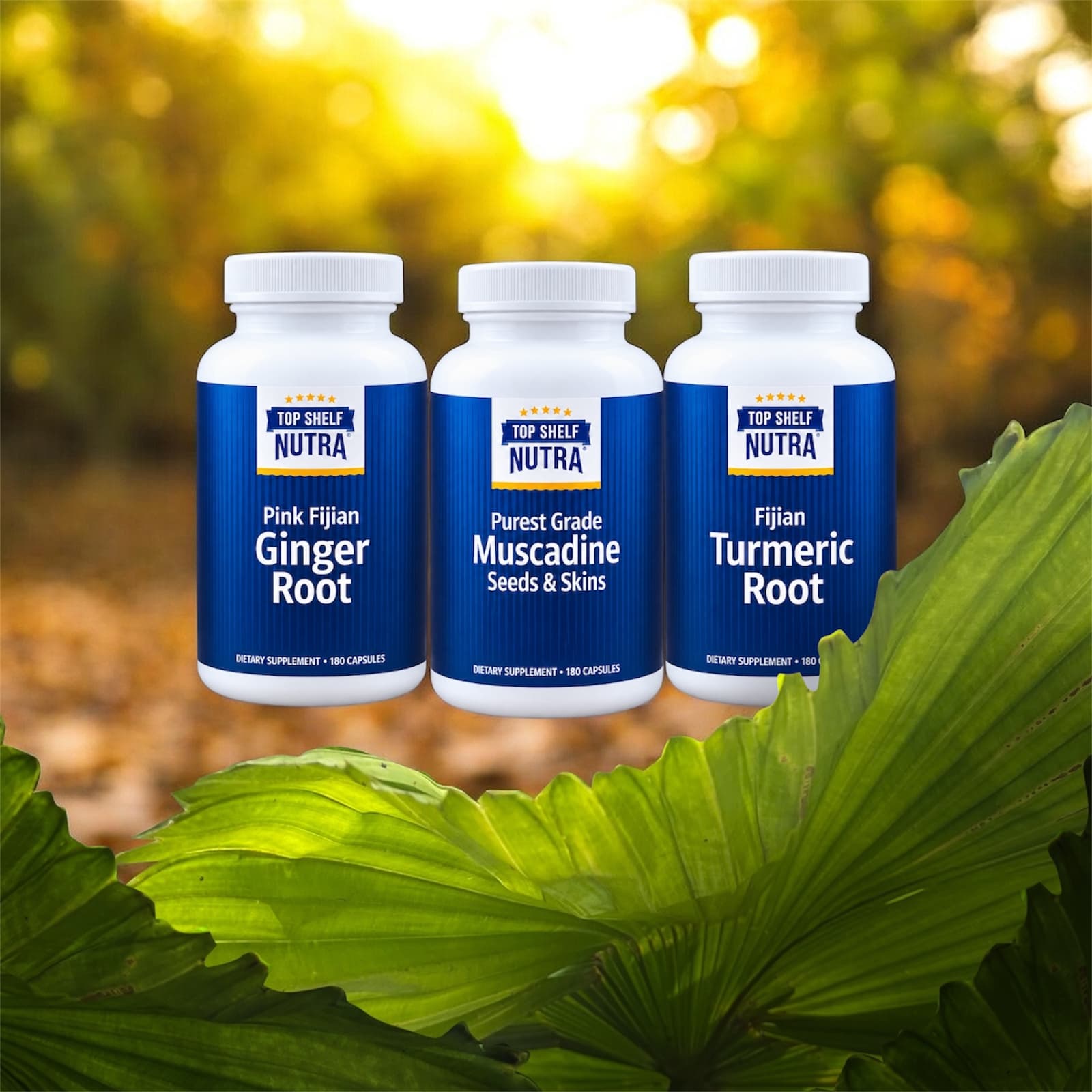
Turn the bottle around and discover the story behind TopShelfNutra’s ingredients. Get to know Pink Fijian Ginger, Fijian Turmeric, and muscadine—and learn what to look for on your product labels.
October 7, 2026 · 4 min read
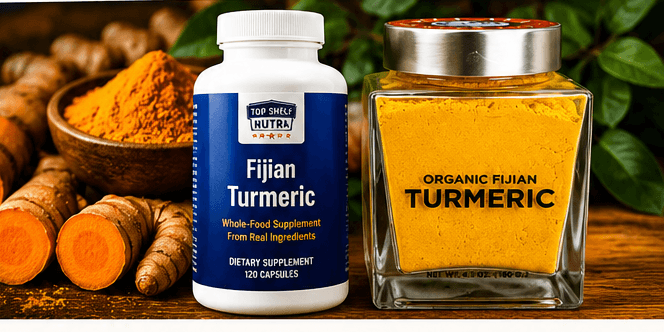
Explore TopShelfNutra’s Organic Fijian Turmeric—from Wakaya’s volcanic soil and hand harvest to whole-root preparation, everyday uses, and research on turmeric and curcumin.
September 6, 2026 · 7 min read